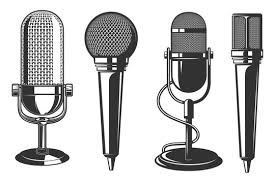
Being a Digital Media Productions major I use technology a lot. Comcomputers, cameras, and all sorts of complicated interfaces I don’t have the time to name it. But the one thing that flies under everybody’s radar is the microphone. An essential piece of equipment, with a hundred different layers of complexity.
When you think of a microphone, I’m willing to bet the first thing that comes to your mind is a famous singer holding a rectangle with a sphere at the top. The dynamic microphone is the most popular kind because every time you see somebody using a mic It’s probably one of those. But there are multiple kinds of different mics, each with their own distinct purpose. When recording a podcast, one might think you would just use the same dynamic microphone, right? To be fair you could, but there are better options. While a typical singer’s microphone is held in their hand so they can move around and perform in a podcast booth, where would you be moving? These kinds of microphones are dedicated to isolating all background noise and other voices so it can get a crisp, clear read on the voice speaking into it. A lavalier mic is a very small microphone you can clip on to your shirt; that way you could move around and speak without holding anything. However, it lacks the noise rejection of podcasting mics and struggles to handle the extreme pitch of a singer. This creates a situation-based choice for the best type of microphone, further proving their complexity.
XLR Vs. USB Microphones
Now everybody knows what USB is; you plug it right into your laptop, and it works perfectly: easy, simple, practical. But what is XLR? Think of an XLR cable as the “professional” version of the plug you use for your headphones. While headphones use a small, flimsy jack, an XLR is a chunky, round plug with three little pins inside. It is a complicated process requiring an audio interface to even work, but why then should you use an XLR over a USB? While the USB is a simple, efficient process, XLR offers not only far greater sound quality but also a way to fine-tune your audio to your liking. If you scream into your phone microphone, it will come out as static, ear-destroying noise, but with tweaks and refinement, if you scream into your XLR microphone, you will get clear, loud sound that is usable for any project.
As somebody in the video editing space, I thought audio to be a rather unimportant problem; after all, most people’s attention is going to be on the actual video anyway. But audio and microphones are the key to great sound design, great vocals, and great music. The hidden complexity of microphones allows for artists around the world to bless our ears with crisp and clear audio. So next time you listen to music, remember all the work these microphones put in.
Leave a Reply